
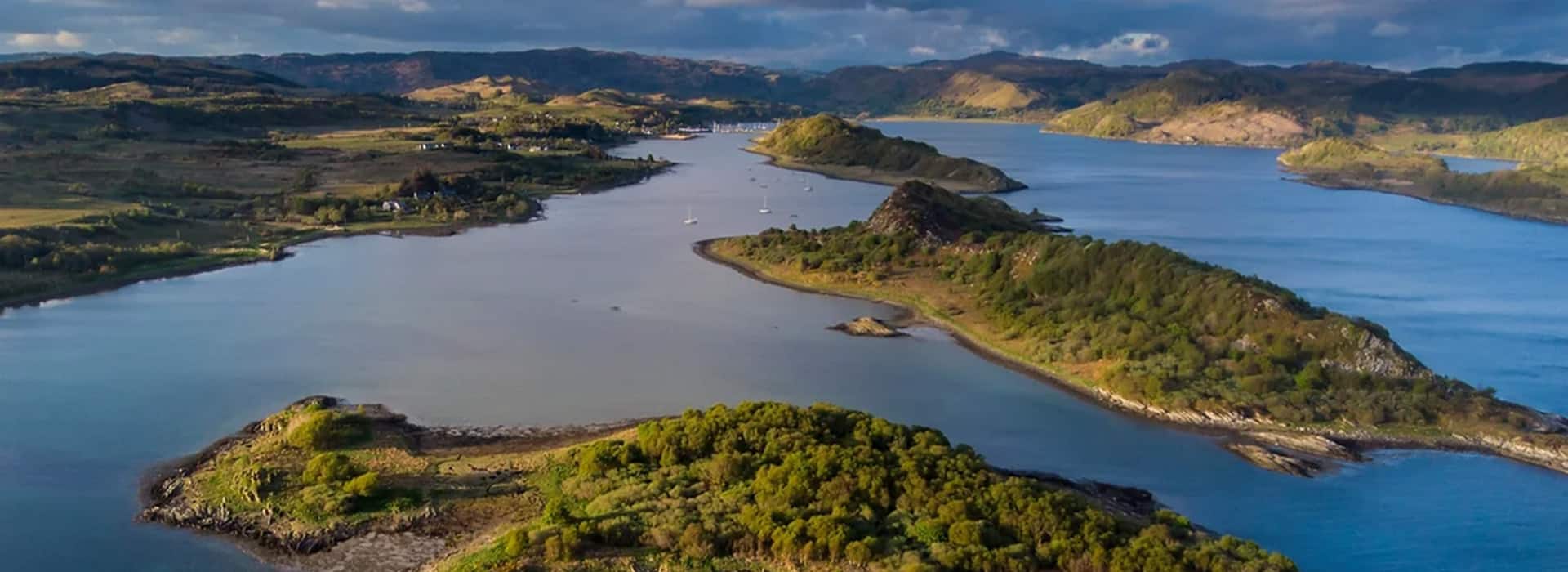
In 2023, Weatherbys’ Creating The Future donated to Seawilding, a Scottish community-led charity working to restore the local marine environment, focussing on seagrass and native oysters. The charity is the first of its kind in the UK and founder and CEO Danny Renton hopes to show people that “restoring nature and creating livelihoods go hand in hand”.
That money helped train four scientific divers with the goal of improving the scope of the work the charity was able to do. What has been happening in the Scottish lochs since then?
Seagrass
“Seagrass in the UK is an absolutely incredible habitat. It’s vital and vibrant and hosts incredible biodiversity in our seas.”
– Dr Alex Thompson, Seawilding science and survey officer
Seagrass has been disappearing rapidly since the 1900s and despite global efforts, attempts to regrow meadows using seeds have had little success. In the past few years, a new technique involving transplantation of adult shoots has dramatically advanced progress of seagrass restoration projects. The Seawilding team began trialling this method in 2023. After a rocky start, the process was honed and seabed coverage in transplanted areas increased from 10% to 70% in 15 months. In 2025, transplanted shoots had a 97% survival rate and seabed coverage increased four-fold after just six months. The meadows donating the shoots are also recovering well and quickly.
Thanks to this success, the project plans to expand in 2026 beyond Loch Craignish to other sites in West Scotland. Transplanting has already started in Dunvullaig Bay to test how far the season can be extended.
Renton said: “For the first few years our seagrass restoration failed. But failure is part of science. We learned, we adapted, and we cracked it.”
The team also won a “Gold” award at Chelsea Flower Show for its collaborative seagrass garden.
Oysters
“We’ve spent generations taking from the sea without asking what it gives back. Now we’re starting to see the ocean not as a resource but as a partner.”
– Danny Renton, Seawilding CEO and founder
Native oysters are great at filtering the water around them and remove excess nutrients. This provides benefits for seagrass and other plants in the lochs. Oyster reefs also provide a structure for fish nurseries and improve biodiversity. They used to cover 1.7 million hectares of seabed in Europe, but now, thanks to overharvesting by humans and the spread of disease, the native oyster reef system is functionally extinct.
The team at Seawilding takes native oysters from hatcheries and transfers them to a nursey in the loch where they are protected from predation. While sourcing these young oysters has been difficult, the ones that have made it to the loch are growing well and the population is beginning to grow naturally.
In 2025 the team trialled different methods for protecting released native oysters from starfish predation and is now considering capturing starfish from the nursery and releasing them elsewhere in the loch. The team has also been trialling ‘spat collectors’ which mimic the surface oyster larvae like to settle on so that they can be taken to nurseries and allowed to grow without risk from predation.
2026 is shaping up to be a good year for the charity and the lochs it is working to restore. As Renton puts it: “Ultimately, success is a change of mindset – an embrace of proactive, visionary policy and a recognition that the sea is our most precious commons.”
To learn more about Seawilding head over to the website: Seawilding | Native Oyster and Seagrass Restoration, Scotland, United Kingdom