
Latest government reports state that 36[ES1] % of working-age people have a long-term health condition. The figure has been going up since the pandemic. Alongside this, rates of mental illness and loneliness[ES2] have been increasing, with people in poor health almost three times more likely to feel lonely than those in good health[ES3] .
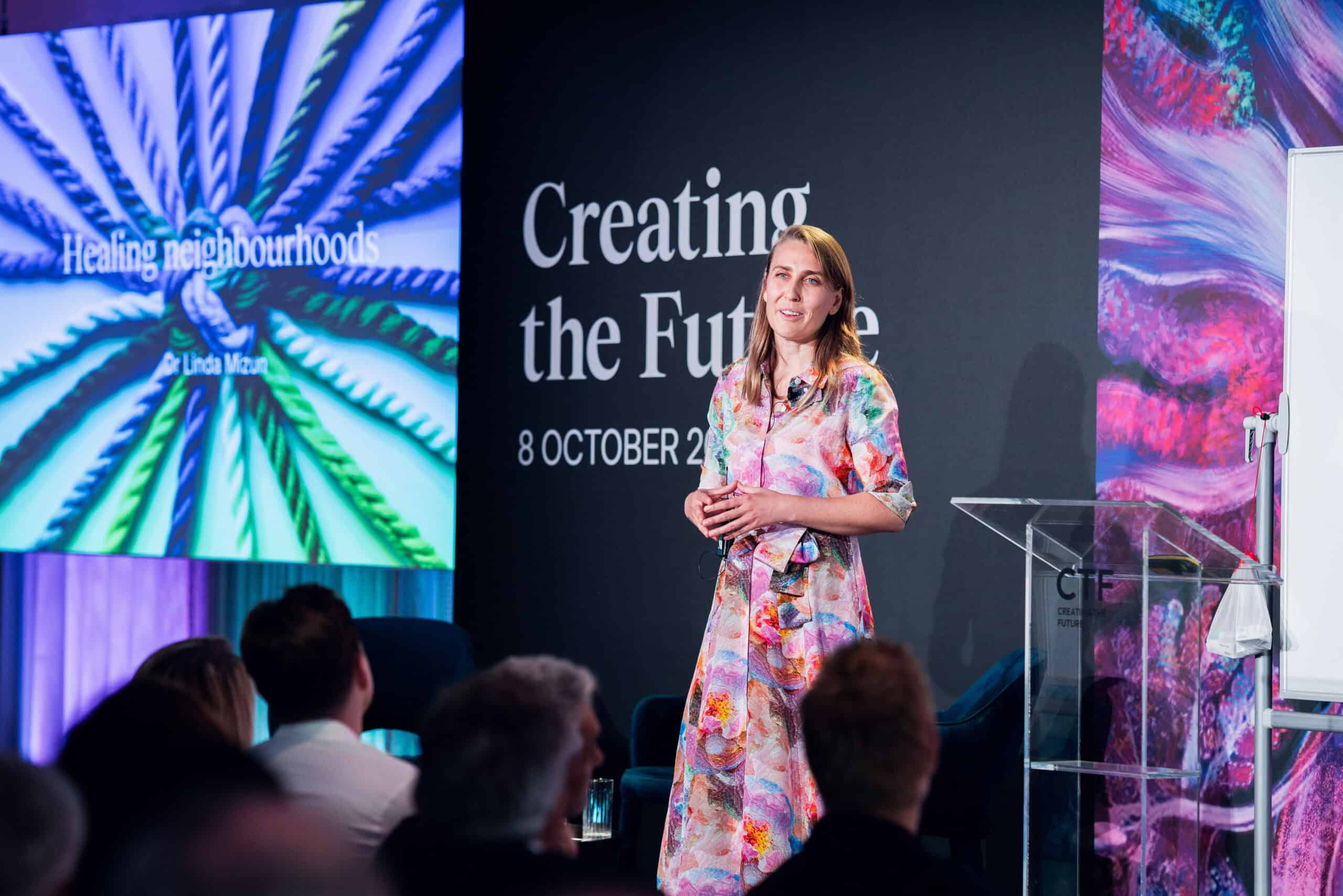
During her talk, Dr Mizun addressed the cyclical nature of these trends. In the early days of sharing her knowledge, she discovered that patients who had “at least a family member or a bit of a community around them at home” started making positive changes and reversing conditions such as heart disease and diabetes. “The people who didn’t have communities were unable to get better, no matter how much effort they put in,” she said.
Dr Mizun believes the key to reducing the prevalence of chronic diseases in the UK is improving social health by giving people purpose and autonomy within their local community.
The impact of Healing Neighbourhoods
In other parts of the UK, Healing Neighbourhoods have helped people achieve amazing results. For one community in Sheffield, for example, participants saw a 44% reduction in GP visits and a 78% reduction in depression and anxiety[ES1] .
Dave Bembick, who was referred to the project by his GP, lost a stone and a half and reversed his type 2 diabetes. He said: “I’ve gained a lot more confidence – and I’ve also gained friends. It’s just changed my life completely.”
Dr Mizun argues that changes like this can take as little as three months. Others in this timeframe have regained the ability to walk without aids and have improved key health markers.
One participant shared that Healing Neighbourhoods are “exactly what the community needs”. Another added: “I wouldn’t walk on my own. But because you walk with company and the two groups I walk with are such nice people, I really enjoy it.”
Dr Ras Perera, a local doctor who was able to refer people to the service, said: “We’re essentially firefighting a lot of the time. We’re dealing with the problems after they’ve developed. Looking at the root cause of ill health and disease is far more important.”
What it means for Wellingborough
Once the project is set up in Wellingborough, GPs will be able to refer people to the service for help. Participants will then have access to mental, physical and wealth coaching from two local full-time coaches, as well as sleep, nutrition and financial literacy programmes. Through groups and peer coaching, they will also be introduced to others facing similar challenges – creating, as Dr Mizun explains, “a network of neighbours who look out for one another”.
We hope to have our Wellingborough Healing Neighbourhood up and running soon and look forward to sharing further updates with you throughout the process.
“The UK’s health crisis is not a failure of medicine. It’s a failure of connection.”
Dr Linda Mizun, co-founder of Hero of Health
Dr Mizun will return to talk to Weatherbys audiences and explain how to get involved with the Healing Neighbourhoods project later this year.
[ES1]https://www.heroofhealth.com
[ES1]https://www.ons.gov.uk/employmentandlabourmarket/peoplenotinwork/economicinactivity/articles/risingillhealthandeconomicinactivitybecauseoflongtermsicknessuk/2019to2023
[ES2]https://www.campaigntoendloneliness.org/wp-content/uploads/The-State-of-Loneliness-2023-ONS-data-on-loneliness-in-Britain.pdf
[ES3]https://digital.nhs.uk/data-and-information/publications/statistical/health-survey-for-england/2024/loneliness-and-wellbeing?